

This is no longer theory or a vision of the future. The change is already happening.
About a year ago, when I realized that coding agents were beginning to deliver real value in software development, one thing became immediately clear to me: we needed to move quickly. Our customers had already started adopting coding agents, and continuing with old ways of working would effectively have meant wasting both time and money.
At the same time, another realization quickly followed: being AI-ready is not just about prompting.
One of the biggest misconceptions in AI-assisted software development is the idea that the most important skill is “good prompting.” In reality, success depends far more on the surrounding environment, operating models, and quality controls than on individual prompts.
Coding agents are extremely productive, but they are also highly prone to drifting off course. If an agent is given an unclear objective, overly broad permissions, or poor context, it can produce mistakes very efficiently. In the worst case, an agent can generate large amounts of incorrect changes very quickly and with complete confidence.
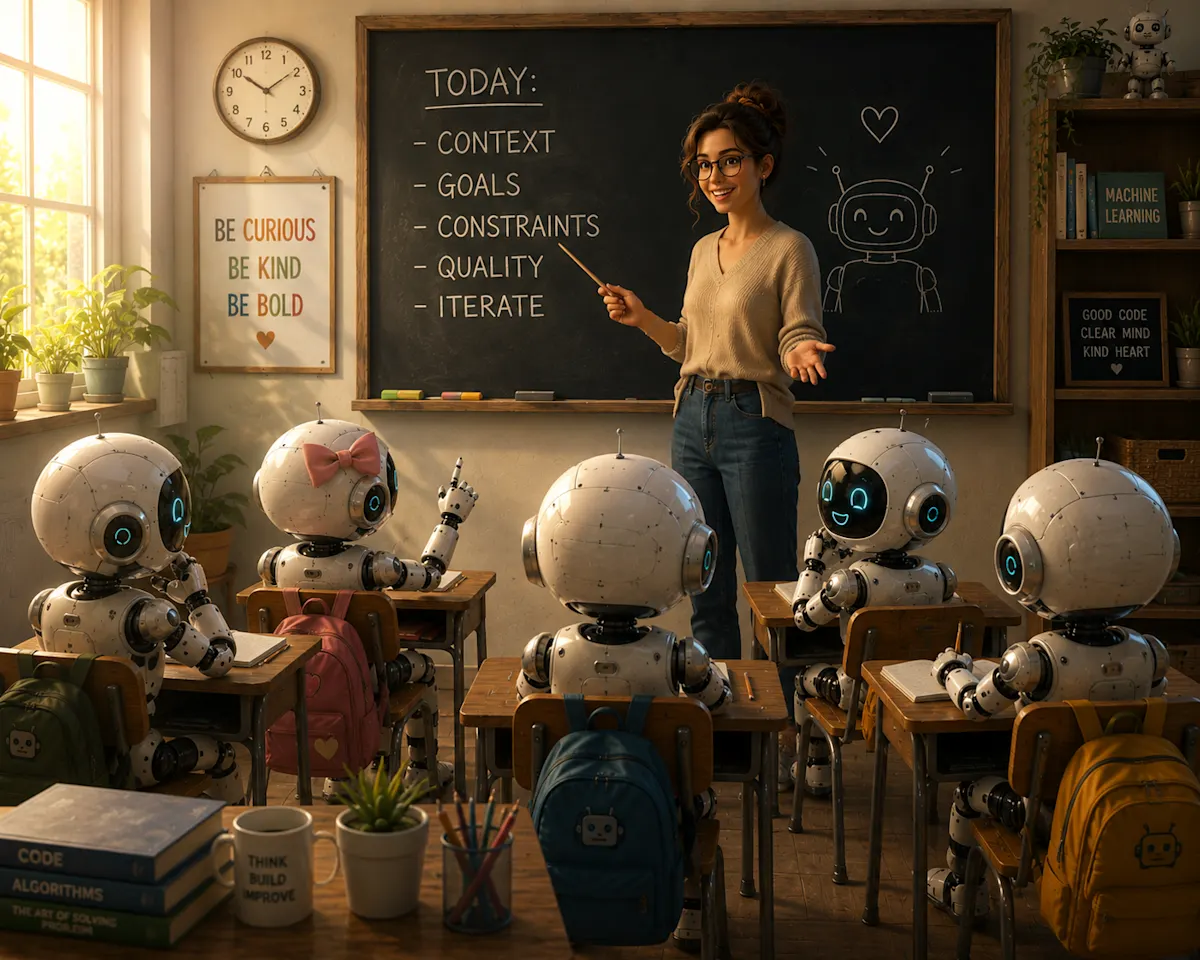
This is why coding agents require a controlled operating environment. Agents need precise context and access only to the resources required to complete the task. Their behavior must also be guided through project-specific rules, standardized inputs, and clearly defined workflows. In practice, an agent needs to be taught how the project operates in much the same way as a new developer joining the team.
This has been one of the most important lessons we have learned at NorthCode: production projects should never rely on completely “vanilla” agents. The more responsibility agents are given, the more important the surrounding governance and control mechanisms become.
Ironically, AI does not reduce the importance of good software engineering practices — it increases it. As the volume and speed of code changes grow, fast feedback loops become critical. CI pipelines, test automation, quality controls, secure delivery pipelines, and solid architecture are no longer simply best practices. They are prerequisites for safe and scalable agentic software development.
Poorly designed environments do not scale with agents. They break faster.
At the same time, the role of the software developer is changing fundamentally.
I believe we are moving toward a future where manual coding is reserved almost entirely for rare corner cases that AI cannot yet solve reliably. Coding agents will handle the vast majority of implementation work, while developers focus on architecture, orchestration, governance, validation, and ensuring that the agents operate correctly within controlled environments.
This does not make software developers less important. Quite the opposite: responsibility increases. Our job is to ensure that agents operate correctly, that the output they produce is reliable, and that systems remain manageable even as the pace of change accelerates significantly.
This is why we decided at NorthCode to train our entire organization in AI-ready ways of working, including our leadership team. We wanted to ensure that everyone in the organization has the skills required to operate effectively in this new era of AI-assisted software development. The goal was not to treat AI as an isolated experiment or a tool used by only a few individuals, but to make sure the entire company understands how to work safely and effectively alongside coding agents.
At the same time, we have also trained our customers to prepare for this transformation, because the question is no longer whether AI will change software development.
It already is.
The competitive advantage of the future will not come from writing the code. It will come from the ability to guide agents safely, efficiently, and in a controlled manner.